By the California Department of Public Health ATRC Team
What does it take to age well? Healthy food, physical activity, social connection, access to health care, and opportunities to participate in community life all play a role. But there is another factor connecting many of these pieces: the ability to get where we want and need to go. September is National Healthy Aging Month, a timely opportunity to consider the role active transportation plays in supporting health and well-being throughout our lives.
According to the CDC, healthy aging begins at any age and is the process of maintaining good physical, mental, and social well-being. Research published in the American Journal of Public Health identifies mobility — the ability to move around independently and reach the place and activities that are part of everyday life — as fundamental to healthy aging. When communities are designed to be easier for walking, biking, rolling, and connecting to transit, active transportation can support mobility and, in turn, many of the factors that help us age well.
Walking provides a useful example. According to AARP research, 87% of adults age 50 and older find reason to engage in some form of walking daily, including walking for leisure, exercise, recreation, or walking a pet, yet only 38% report walking to get to and from places. Those surveyed also recognize walking as beneficial to physical, mental, and brain health. The difference between walking for these purposes and walking for transportation raises an important question for active transportation practitioners: What would make it easier for people to walk as part of their everyday trips?
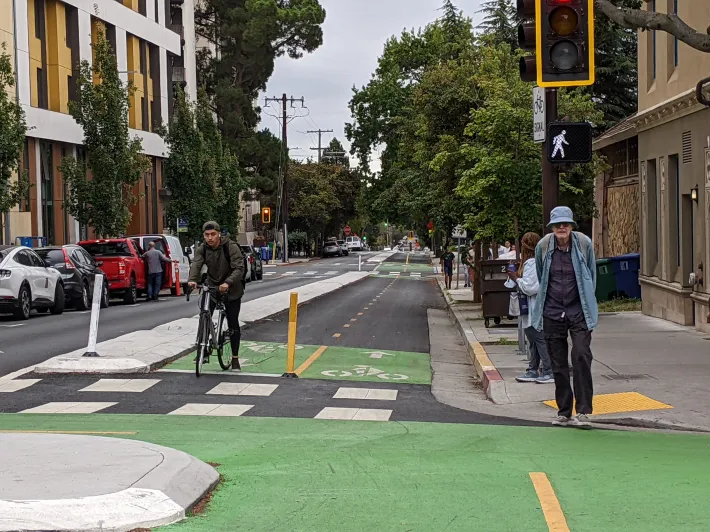
The built environment is an important part of the answer. In a separate AARP summary of research from NORC at the University of Chicago, 87% of adults age 50 and older identified continuous, easy-to-use sidewalks with ramps as important for feeling safe in their communities. Adequate crossing times and better lighting at street corners and bus stops were also identified as important features. The way we design our streets can help – or hinder – our ability to move freely and independently throughout the community.
Since we are all aging, here are some ways to engage in and celebrate National Healthy Aging Month:
The University of Minnesota Extension’s 2026 Healthy Aging Month Webinar Series features free webinars on brain health, healthy eating, social connection, physical activity, independent living, age-friendly communities, and other aspects of well-being. As you explore the series, ask: What role does mobility play here? How might someone’s ability or inability to safely reach everyday destinations affect this aspect of healthy aging?
Smart Growth America’s Aging in Place with Complete Streets video takes viewers to Saco, Maine, and offers a useful example of how a rural community is creating streets that help people safely reach everyday destinations and support healthy aging.
The American Planning Association’s Policy Guide on Aging in Community offers guidance for considering transportation alongside land use, housing, health, and other systems that shape people’s ability to remain connected to their communities as they age.
AARP also offers several resources that can help active transportation practitioners examine mobility and healthy aging in their communities. Of particular interest are AARP’s Network of Age-Friendly States and Communities and Livable Communities where you can access many resources and learn about their funding opportunity that complement the goals of the Active Transportation Program. Explore the Livability Index where you can rate your own community across a broad set of indicators that most significantly impact the quality of life for people of all ages, including transportation, health and social engagement.
As we think about healthy aging, walking is only one part of the mobility picture. Bicycling, including e-bikes, rolling, and safe connections to public transit can provide additional ways for people to reach everyday destinations and remain connected to their communities. Creating transportation options that work for people of different ages, abilities, and communities can help support mobility throughout our lives.