By the California Department of Public Health ATRC Team
September marks California Pedestrian Safety Month, followed by National Pedestrian Safety Month in October. Together, these observances highlight the importance of creating safer, accessible places to walk. Walking is a fundamental form of active transportation that supports physical activity, improves community health, and connects people to schools, jobs, transit, and everyday destinations. Despite these benefits, pedestrian fatalities remain a public health concern.
In 2024, 7,080 pedestrians were killed in traffic crashes across the U.S, including 1,090 in California1. According to the Governors Highway Safety Association (GHSA), three in five deaths occurred where sidewalks were absent, and most fatalities happen at night. Although the GHSA reports pedestrian deaths fell slightly in 2025, these findings reinforce the need to raise awareness, engage communities, and continue strengthening cross-sector collaboration to improve pedestrian safety.
Whether you’re new to active transportation or an experienced practitioner, the following resources provide practical tools and ideas to help advance pedestrian safety efforts during both California and National Pedestrian Safety Months, and beyond.
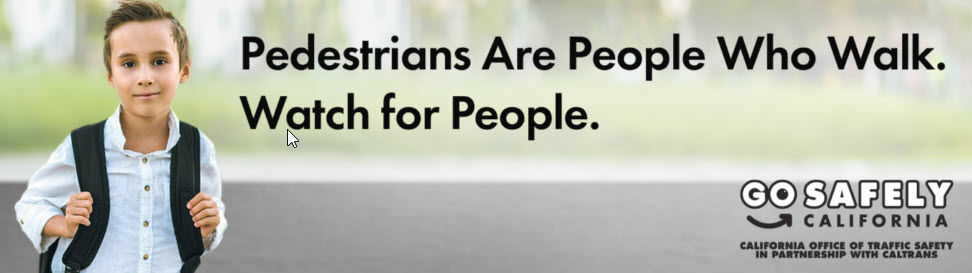
Visit the Office of Traffic Safety and Caltrans Go Safely California and the NHTSA Traffic Safety Marketing websites to find educational materials and resources that communities can use to help with messaging on how drivers can keep pedestrians safe and how pedestrians can stay safe. The U.S. DOT’s Pedestrian Safety Campaign offers ready-to-use materials that can be easily adapted to serve your community.
Consider hosting a walk audit and invite local leaders, businesses, school administrators, and residents to identify pedestrian safety improvements and inspire local change. Resources such as the Walk Massachusetts Walk Audit Academy and the AARP Walk Audit Tool Kit provide practical guidance and downloadable materials to help plan and conduct walk audits. Findings from the audits can be submitted to UC Berkeley’s Street Story community engagement platform. Individuals throughout California can utilize this tool to share their experiences as pedestrians, document incidents such as pedestrian crashes or near misses, report hazards, and identify areas considered safe or unsafe.
Use these months for capacity-building and continuous learning! Smart Growth America’s Dangerous by Design report examines national pedestrian fatality trends, explores how roadway design influences safety, and highlights disproportionate impacts on lower-income and historically underserved communities. Their latest webinar showcases proven pedestrian safety solutions implemented in U.S. communities. Finally, consider enrolling in the ATRC’s in-person Introduction to Active Transportation Planning and Design course to deepen your knowledge of active transportation planning and design.
1Source: National Center for Statistics and Analysis. (2026, June). Pedestrians: 2024 data (Traffic Safety Facts. Report No. DOT HS 813 818). National Highway Traffic Safety Administration. https://doi.org/10.21949/zpk5-j413